Issued before or during construction. It says the design satisfies the authority. Getting it rests on the design — the right drawings and calculations, submitted in the form the authority expects.
The risk here isDesign & documentation
Active and passive fire protection on one contract, to NBC norms — and the Site and Final NOC carried through to clearance rather than handed back to you as a file.
Ten active systems and three passive. Most contractors carry the active list and stop there; compartmentation is then split across trades and nobody owns it at the Final NOC inspection. Here it is one scope and one contractor.
Choose a system to see where it sits in the building.
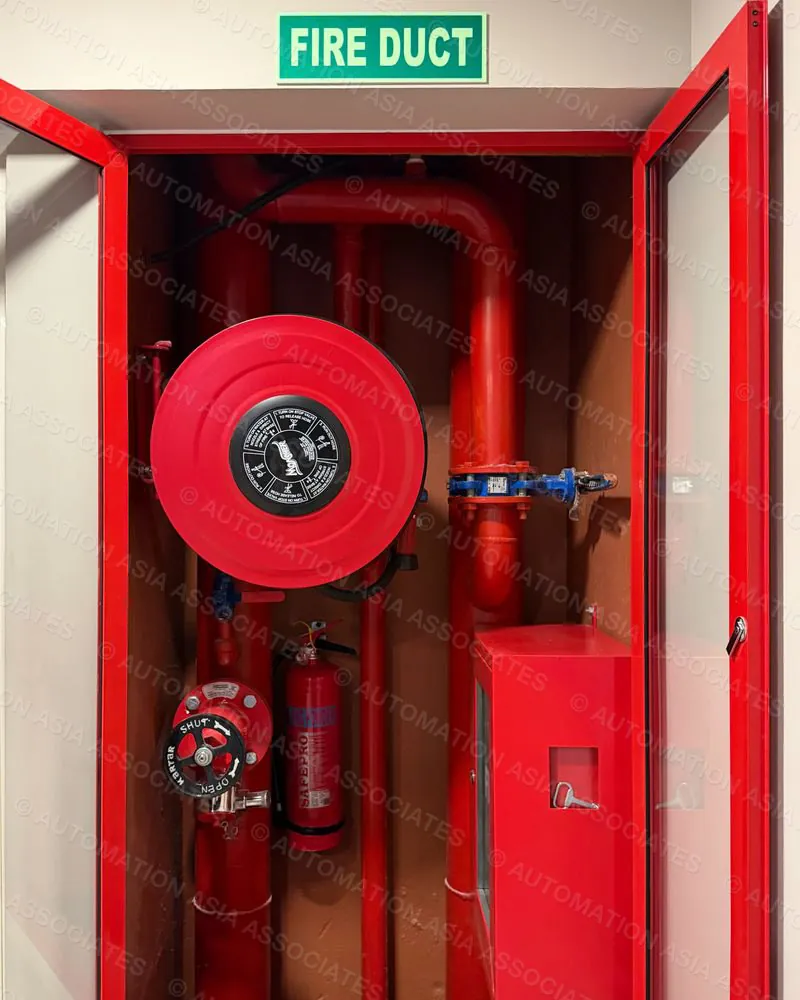
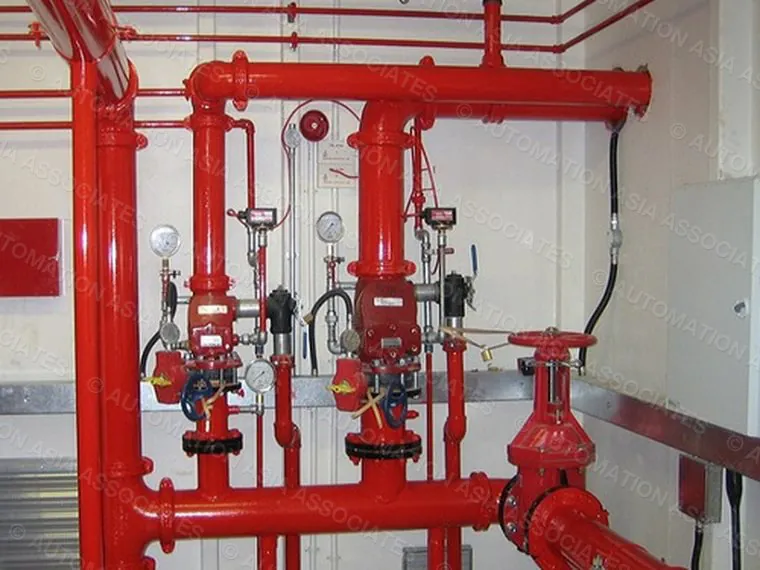
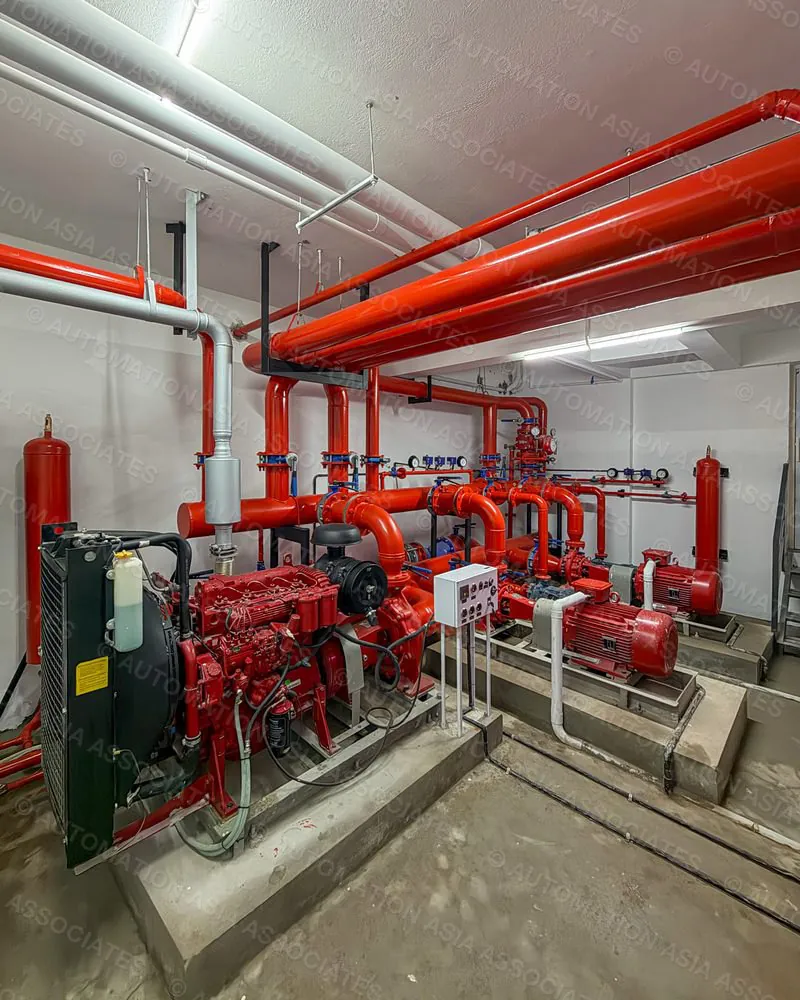
Our own site photographs, not stock.
They are often spoken about as one thing. They are not — and the second one is what stops your handover.
Issued before or during construction. It says the design satisfies the authority. Getting it rests on the design — the right drawings and calculations, submitted in the form the authority expects.
Issued on physical inspection, and the building can't be occupied until it's granted. Once the Site NOC is in hand, every remaining risk is installation risk — and installation risk belongs to the contractor.
A system installed to a drawing the authority never approved. Compartmentation broken by a door or a penetration nobody owned. Commissioning records that do not match the as-built. All of it surfaces at the Final NOC inspection — when the building is finished and the client is waiting.
The approvals as part of scope rather than as a variation — both certificates when we carry the design, or the Final NOC when your consultant has secured the Site NOC. The drawings, the submission, the queries and any re-inspection, coordinated with your consultant throughout.
The order mirrors how a real project runs — advisory, then drawings, then installation, then statutory approvals, then the maintenance that keeps the clearance valid.
Already working with an MEP consultant? We can join at installation, build to their approved design, and work as a partner to them and to you. Nothing is changed on site without their approval and yours.
The Site NOC is granted against drawings, before or during construction: it says the design satisfies the fire authority. The Final NOC is granted on physical inspection of what was built, and the building cannot be occupied until it is granted.
Yes, as part of our scope rather than as a variation: both certificates when we carry the design, or the Final NOC when your consultant has secured the Site NOC. That covers the drawings, the submission, the queries and any re-inspection.
Thirteen, on one contract. Ten active systems: fire hydrants and pump rooms, sprinklers, water spray, wet risers and landing valves, fire alarm and detection, CO₂ flooding, gas detection, foam monitors, voice evacuation and CCTV. Three passive ones: fire doors, smoke curtains and fire guards.
Systems are designed, installed and maintained to the National Building Code of India (NBC). We are ISO 9001:2015 certified and a registered Kerala PWD contractor, Category Electrical-Firefighting-B.
Yes. Our annual maintenance contracts (AMC) give scheduled maintenance for commercial, industrial, hotel and hospital premises, the upkeep that keeps a fire clearance valid.
From our office in Thiruvananthapuram, across Kerala and South India and beyond: 400+ projects in 10+ states since 1989.
Fifteen minutes on the phone, or a walk-through at your site anywhere in Kerala, on where it stands for hydrants, sprinklers, alarms and NOC status, before an inspection fails or a renewal falls due. No cost, no obligation.
Not sure where your building stands today?
Free compliance checkChanges save immediately and everyone with the link sees them, on every page. Photos of any shape are accepted — drag and zoom to choose the crop, and anything without the pixels to publish sharply is refused with the numbers.